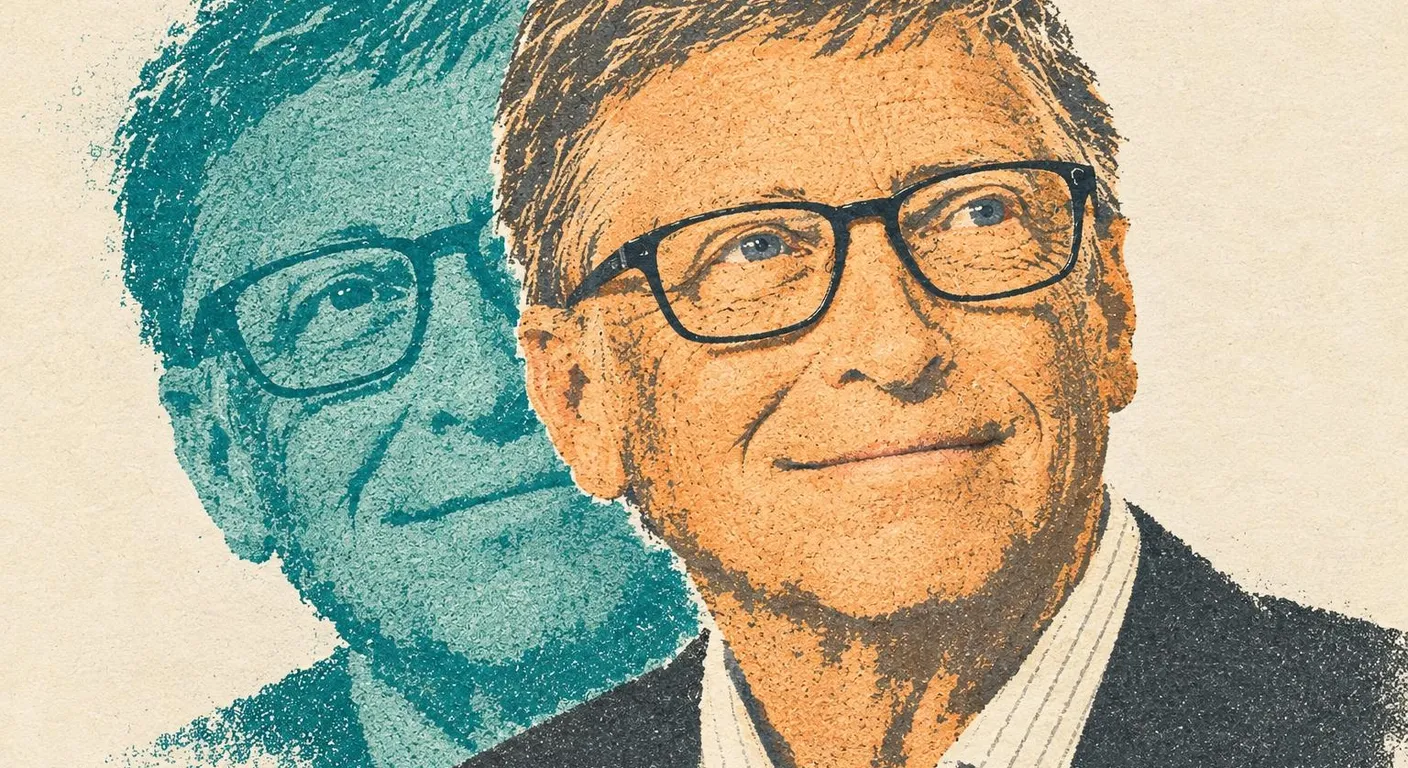
The Gates Foundation says it will spend at least US$1 billion over the next two years to widen access to artificial intelligence in health, education and agriculture. The commitment, announced with the foundation's 10th annual Goalkeepers Report in mid-September 2026, carries a blunt argument: AI will not spread its benefits on its own. In the report, foundation chair Bill Gates writes that left to the market, AI "will be designed by and for the richest people in the world."
Where the billion is meant to go
The foundation's announcement splits the two-year budget roughly 40% to education, 40% to health care, 10% to agriculture and 10% to the digital foundation that equitable AI depends on. That last slice is the least visible and arguably the most structural: it funds datasets in languages the tools do not handle well today. The 2026 report, Make This Matter: AI, Equity, and the Choice We Can't Delay, argues that AI's direction is a choice rather than a forecast.
The release does not put a dollar figure on the language data. Read as a share of the full pledge, the 10% for the digital foundation works out to about $100 million if all of the money is spent.
The training data is the quiet constraint
One figure explains why language work sits inside an AI access pledge. More than 90% of the data used to train early large language models came from English-language sources, the foundation says. A system trained on that corpus is not neutral. It is sharpest for the people whose speech and writing produced the data, and weakest for everyone else. Dataset building looks like plumbing next to a chatbot launch, and it is what decides whether a tool works in a clinic where the conversation happens in a language the model has barely seen.
Why it matters
Gates puts a clock on the decision. He writes that the choices made in the next 12 to 18 months about how AI is built, funded and deployed will determine whether it mainly benefits people who already have the most or reaches those who have the least. "This is not a long-range prediction. It's a present-tense choice," he writes.
The framing rejects two easy stories. It rejects the idea that adoption is automatically progress, and it rejects the idea that the outcome is fixed. Gates's wider position, in a separate essay published the same week, is that AI "will either be the greatest equalizer ever invented, or the worst source of injustice."
The arithmetic is worth pausing on. Gates's window is 12 to 18 months. The commitment runs two years. If the decisive choices are made in the shorter period, some of the money arrives after the decisions that shape it, and its value depends on what it can change in products and public systems that already exist.
What a billion dollars can and cannot buy
Philanthropy can pay for datasets, pilots, clinics and classrooms, and the measurement that shows whether a tool actually helps a health worker or a farmer. It cannot by itself change the commercial incentives that decide which products get built and who pays for them. Gates draws that line in the report, calling the market an extraordinary engine of innovation but "a terrible guarantor of equal opportunity." His remedy is not charity alone: he calls for "a deliberate, specific commitment from government leaders and the companies developing the technology."
That leaves the pledge in an honest but awkward position. It is a bet that AI's direction can still be steered, made by an institution that cannot steer it alone.
There is a political edge underneath it. Gates Foundation CEO Mark Suzman told the AP that the foundation would keep pressing Congress and the Trump administration to lead on foreign assistance, saying, "We haven't given up on the U.S.," according to AP coverage. Private money is filling space where public money has been contested.
The question the pledge leaves open
Assume the money works as intended, and a smallholder farmer or a rural clinic gets advice that is genuinely useful. Does that settle who AI is built for, or only prove that demand exists in places the industry does not yet serve? Should a foundation this size spend on access to AI as it exists today, or on building the evidence that the next generation of models should be designed differently from the start?