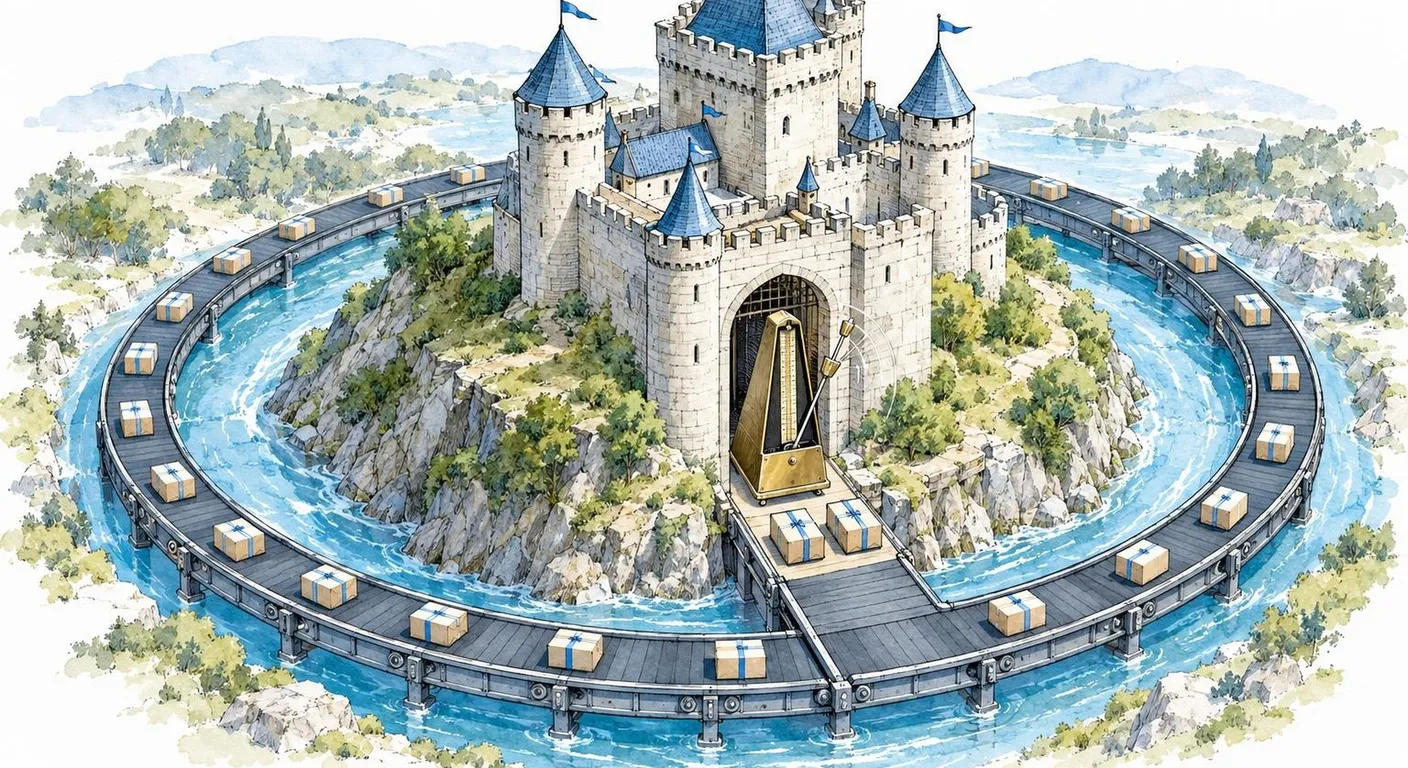
OpenAI shipped two frontier models in 48 hours. ChatGPT Images 2.0 landed on April 21, scoring 1,512 on LM Arena's text-to-image leaderboard. That score sits 242 points ahead of Google's Nano Banana 2, the largest gap between #1 and #2 the leaderboard has ever recorded. Two days later, GPT-5.5 arrived with a 1 million-token context window and an API price that doubled. Neither launch was a surprise on its own. Together, they were a cadence test.
The 48-hour window
ChatGPT Images 2.0 made image generation behave more like reasoning: the model researches a subject, plans a composition, revises, then renders. It is the first OpenAI image model with built-in reasoning, and the first that can search the web before drawing a single pixel. Two days later, GPT-5.5 arrived as a work model, pitched at coding, research, and long-running computer use with a 1 million-token context window.
Two completely different model families. Same week. The calendar is the story.
The numbers prove it isn't iterative
A 242-point lead on Image Arena means GPT Image 2 wins roughly 80% of head-to-head comparisons against the next best system in the world. That is not a refinement; it is a generational reset. GPT-5.5 hit 82.7% on Terminal-Bench 2.0, the benchmark that matters for autonomous coding agents, and a 1M context window the company is positioning for long professional sessions.
Then there is the price. GPT-5.5 costs \$5 per million input tokens and \$30 per million output tokens. The previous flagship, GPT-5.4, was \$2.50 and \$15. The per-token rate doubled.
The release schedule is the product now
GPT-5.5 shipped 48 days after GPT-5.4, closer to seven weeks than six. That is a different rhythm from the model era when major capability jumps were treated like rare events.
The deeper signal is how OpenAI says it built the model. The Deep View reports OpenAI used the model itself and Codex, its agentic coding tool, in the process. If models help build the next model, the bottleneck moves from research alone to the whole release system: evals, safety testing, pricing, routing, and product rollout.
That changes the competitive question. The race is no longer who has the smartest model on launch day. It is who can keep retraining, packaging, pricing, testing, and shipping new capability before the last release has finished settling into workflows.
Pricing is the second tell
OpenAI argues the per-token doubling overstates the real cost increase. GPT-5.5 uses approximately 40% fewer output tokens to complete the same Codex task as GPT-5.4, so the effective cost rise is closer to 20% on real workloads. At Batch pricing, the company says, a typical Codex job ends up at the old GPT-5.4 standard rate.
Maybe. The list price is still the signal customers see first. It is the rate that gets quoted in procurement decks and budget reviews. The headline doubled.
Read what is being said, and what is being said by saying it. Frontier capacity is being priced like scarce infrastructure, where the floor moves because demand for the floor moves. Speed held steady. Smartness rose. The price doubled. That sequence does not describe a commodity. It describes a utility with a captive demand curve.
Why it matters
The uncomfortable part is not that OpenAI had two good launches. It is that the launches point to a system that can obsolete its own product on a Wednesday. When the release schedule itself moves faster than competitors can ship, the rebuild becomes the moat. Not the model.
Anthropic shipped Claude Opus 4.7 on April 16, ten days before OpenAI's first launch. Google's Gemini 3.1 Pro arrived in February. Both companies build excellent models. Neither has demonstrated that they can ship two foundation-model launches inside a 48-hour window with an integrated pricing change and a coordinated product rollout across ChatGPT and Codex. That is not a model problem. It is an organizational one.
If the loop tightens, if Codex helps build GPT-5.6, which helps build GPT-5.7, which ships seven weeks after that, the asset is no longer the latest model. The asset is the factory. Each individual model becomes a rental that gets replaced before its lease is up.
That changes what a competitor has to copy. Building one frontier model is a hard problem with a known shape: a few thousand engineers, a few hundred million dollars of compute, a year of work. Building a frontier model factory that can ship two foundation-model launches in the same week and reprice the API while it does is a different kind of problem. Most of the people who could solve it do not work at the companies that need to.
If frontier models can be refreshed on a seven-week clock, does product strategy matter less than shipping machinery?
Originally published as an Instagram carousel on @recul.ai.