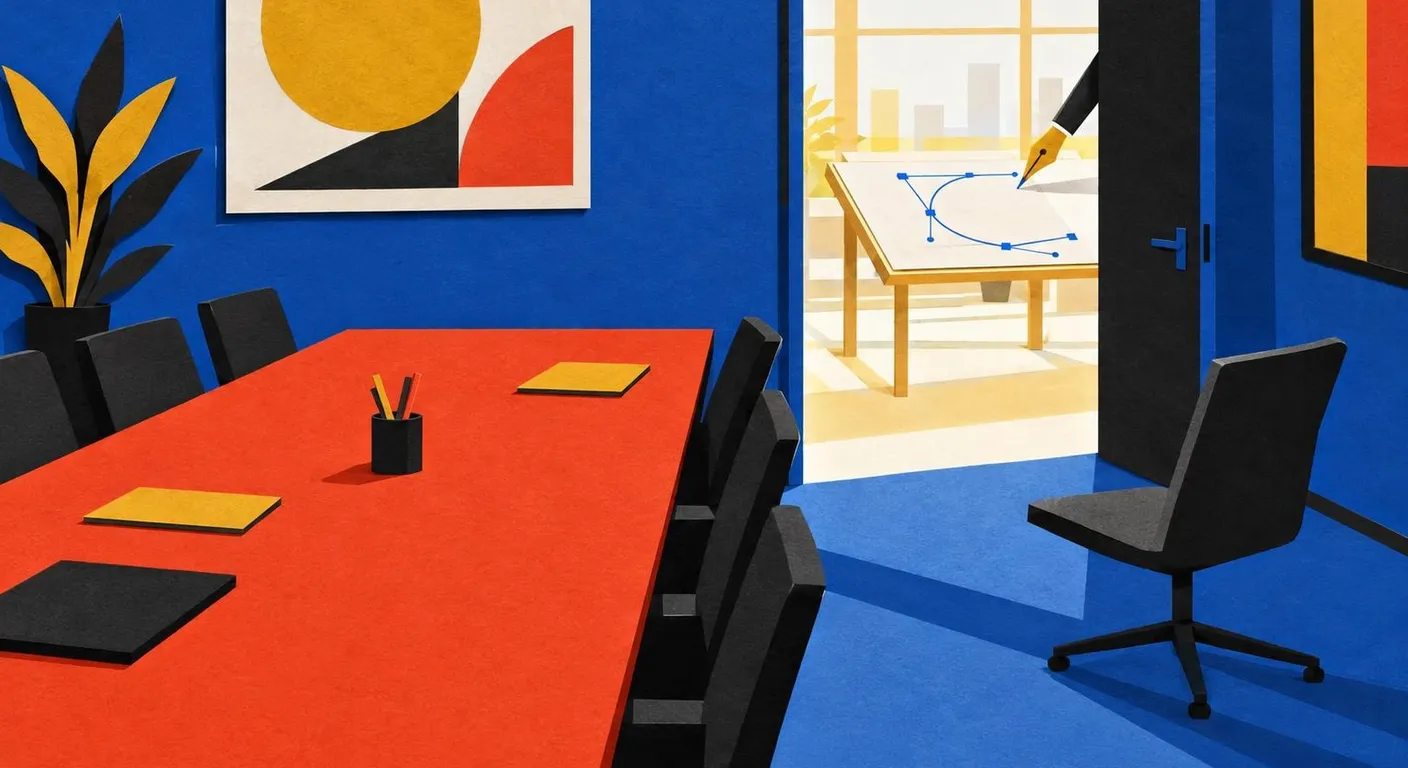
On April 14, 2026, Mike Krieger, Anthropic's Chief Product Officer and Instagram's co-founder, resigned from Figma's board of directors. The exit was disclosed to the SEC the same morning that The Information reported Anthropic was shipping a design tool. Figma's stock closed at $17.65 that afternoon, an all-time low. Three days later, Claude Design launched.
The sequence is not a coincidence.
The boardroom was the first tell
Krieger joined Figma's board less than a year ago, shortly after becoming Anthropic's first CPO in May 2024. For most of that year, Anthropic was one of Figma's core AI partners. In February 2026, the two companies announced Code to Canvas, an integration that let Claude transform code into Figma designs inside Figma's own canvas. That partnership was still live when Krieger quietly filed his SEC resignation notice.
Figma's SEC filing used boilerplate language: the departure was "not due to any disagreement." The market did not read it that way. Figma shares, already down sharply from their 2025 IPO peak, dropped to an intraday low of $17.65 on April 14. They are now down more than 80% from the $142.92 the stock hit on August 1, 2025, the day after Figma priced its IPO at $33.
Two days after Krieger's exit, Anthropic shipped Claude Opus 4.7. The day after that, Claude Design went live, running on the new model. Figma slid another 7% on the news. Adobe dropped 2.7%.
What Claude Design actually does
Claude Design is a research preview that turns conversation into prototypes, slides, one-pagers, and landing pages. It runs on Claude Opus 4.7 and is available to Pro, Max, Team, and Enterprise subscribers, with usage counted against existing plan limits. Users describe what they want, Claude builds a first draft, and refinement happens through chat, inline comments, or sliders Claude generates on the fly. The output exports to PDF, PPTX, HTML, Canva, or hands off directly to Claude Code for production.
At launch, Claude Design reads a user's codebase during onboarding and applies the team's existing design system automatically. That detail matters. It means Claude Design is not pitching itself as a standalone tool that replaces Figma. The framing is more subtle: this is software that slots into an existing workflow and quietly takes over the "first draft" layer where most design work actually happens.
The category is collapsing
Figma is a design tool with AI bolted on. Canva is a design platform with AI bolted on. Claude is a chatbot that now does design. The labels keep breaking.
That is not a slogan. It is a literal description of what each of the three products is, right now, in April 2026. Figma launched in 2016 as a browser-based design collaboration tool. It added AI features over the past eighteen months. Canva launched in 2013 as a template-based design platform. Its Magic Studio AI suite shipped in 2023. Both are design-first products with AI as an increasingly important feature.
Claude is moving in the opposite direction. It started as an API and a chat interface. In the past six months, Anthropic has shipped Claude Design, Claude Code, Claude Cowork (a knowledge-work agent in research preview), and Claude for Word, a native Microsoft Word add-in. Today, "Claude" is a design app, a code app, a knowledge-work agent, and a plug-in inside Word and Excel. All of that ships on one subscription.
The play is distribution, not software
The most interesting thing about Claude Design is where Anthropic did not try to compete. They did not build a Figma clone, and they did not build a Canva clone. Instead, Anthropic built a research preview that exports directly into those products and into Microsoft Office, and wrapped it in the same subscription as Claude Code and Claude chat.
This is how Microsoft won the desktop era. Not by building the best word processor, but by being the word processor that came installed on the machine. Anthropic is running the same play at the AI layer. Every knowledge worker who pays for Claude already has the design tool, the code tool, and the document tools bundled in. Installing the Word add-in puts Anthropic in the one place Microsoft charged for an Office license. The model is the runtime. Distribution is the aisle.
Canva's CEO, Melanie Perkins, publicly endorsed the launch because Claude Design exports directly into Canva. That endorsement is either graceful partnership or recognition that when a distribution layer becomes big enough, you either integrate with it or watch it route around you.
Why it matters
Two years ago, Anthropic sold API access to a model. Today, it ships a design product, a code product, a knowledge-work agent, and Microsoft Office add-ins, all inside one subscription. OpenAI and Google are doing the same thing from different angles. The decision, by all three labs, to treat "the model" as a component rather than a product is the single most important structural shift in the AI industry this year.
It changes what design-software, productivity-software, and creative-tool incumbents are actually selling. For a decade, Figma and Canva's moats were design quality, collaboration UX, and distribution. Design quality is rapidly becoming table stakes now that any foundation model can generate a passable first draft. Collaboration UX can be replicated. That leaves distribution. And distribution is the one thing Anthropic, OpenAI, and Google are building in parallel, right now, at subscription scale.
Figma's stock is down 80% from its post-IPO peak because the market has started to ask what, exactly, Figma is now selling that Claude does not include in a Pro plan. The Krieger board exit was the market's first clean signal that the answer was getting smaller.
When the lab that builds the model is also the lab that builds the tool, and the lab that ships it inside the software you already use every day, what is left for the tool company to sell?
Originally published as an Instagram carousel on @recul.ai.